The Internet makes information instantly available for Reefkeepers all around the world, but that information can be clouded in inaccurate fog, anecdote, baseless opinion and unsubstantiated arguments from authority. To keep the inaccurate fog at a minimum in an effort to save money and save animals lives, you need to be able to get the information you want as well as share information that others want by communicating well with people and enticing others to communicate well in return. Since communication is one of the keystones of Skeptical Methodology and critical to success in reefkeeping, in this installment of Skeptical Reefkeeping Lives and Money, we will look at strategies for getting and sharing useful information about our boxes of live animals.
A brief reminder to set the scene
Skepticism is a method, not a position. Officially, it can be defined as a method of intellectual caution and suspended judgment. A skeptic is not closed minded to new ideas, but is cautious of ideas that are presented without much, or any, supporting evidence or presented with weak supporting evidence. Being a skeptical reefer essentially boils down to taking advice/products/new ideas with a bucket of salt. Being a skeptical reefkeeper requires that you investigate why, how and if the suggested ideas actually work. As a Skeptical Reefkeeper, you decide what is best for you, your animals, and your wallet based upon critical thinking: not just because you heard someone else say it. The goal of this series of articles is not to provide you with reef recipes or to tell you which ideas are flat out wrong or which products really do what they say they do or which claims or which expert to believe – the goal is to help you make those kinds of determinations for yourself while developing your saltwater thumb in the face of sometimes overwhelming conflicting advice. Communication as a Skeptical Reefkeeper is critical, because it is through communication that we refine our saltwater thumbs.
image from smcyberzone.com
The Internet is just awesome
We are incredibly lucky to be involved in reefkeeping at this point in history – we have the Internet. Right now, you can communicate with reef keepers from all over the world, instantly. At any time of the day or night you can post a question in any number of Internet communities, and get immediate responses from everyone from beginners to specialists. It’s likely that if people who see your question don’t know the answer, they know someone who does know and can get that information back to you quickly. This instant, or near instant, feedback allows us to better manage emergencies we come up against, soundly manage mid and long term strategies we use to keep our reefs thriving, while at the same time helping us come to decisions about what makes sense and what is bunk.
We all have access to what essentially amounts to a giant, distributed Reefkeepers brain, and this kind of communication allows us to directly better our Reefkeeping experience. Lectures, articles and even books are available on the Internet even if they are available in other, more tangible formats. Instant messaging, Skype, and other photo and video avenues allow us to instantly talk and see each other to further sharpen our communication while being able to send pictures or video of any problems for instant clarification.
Of course, the mainstay of Internet Reefkeeping communication are the online forums. Ah, the glorious online forums. Nowhere else can you find such an incredible mix of generosity and vitriol, encouragement and discouragement, information and misinformation; or in the words of Ben Kenobi ‘You will never find a more wretched hive of scum and villainy. We must be cautious’. The trick to maximizing the wonderfulness, to navigating between the haters and the people with the information, is good communication.
What is the point?
“What is the point” is one of my favorite skeptical questions. Asking it allows us to keep ourselves on track and stay away from spinning off into unproductive directions. So what is the point of communication in reefkeeping? There are really two primary points; to get information about keeping our animals alive while saving money and to share information about keeping our animals alive while saving money. Sure, there are other reasons to communicate about reefkeeping including friendship, community, status, ego and the sense of fulfillment that comes from a well-expressed venting session. But, when you boil it down, the lifeblood of all that communication is the getting and sharing of information, and we want to maximize the give and take of that information to improve our knowledge about the hobby we love.
Getting information – Why should someone respond to you?
While a lot of Reefkeepers are very generous with their time, they still have limited resources and there is only so much time in the day to answer people’s questions. At the same time, a look at any online Reefkeeping forum will show you that there seem to be an infinite number of questions being asked. To help make sure your questions are addressed you need to be understood and you have to inspire people to answer you. You have to make it as easy as possible for others to understand which generally means taking a bit of time to craft your questions.
Poorly written posts are no better than hieroglyphics. rgbstock.com
• Do your own research. Most of the questions any reefkeeper asks have been asked before, and a few minutes of searching or reading may give you the information you are seeking. Not asking a question that you can easily get the answer to yourself with a bit of digging respects other peoples time and makes it more likely that they will answer your questions in the future. Reefkeepers really appreciate people who don’t want to be spoon fed answers, and really enjoy answering informed questions. ‘What are these white spots on my fish’ is less likely to get thick and meaty answers while ‘I have been reading about Cryptocaryon irritans and I still don’t understand the best way to treat it in a reef tank – what do you think is most likely to actually work?’ is more likely to generate interesting and informed communication.
• Make it easy for others to understand you. Make an effort to use correct grammar, spelling and punctuation. I know this seems pedantic, but if someone needs to work to understand a question because it is one long run on sentence, if there is a lot of ‘creative spelling’ or if there is too much confusing grammar or punctuation, they are likely to move on to a question they don’t have to work so hard to understand. Taking a bit of time to correct spelling, grammar and punctuation shows people that you value their time and input while making it more likely you get the input you want.
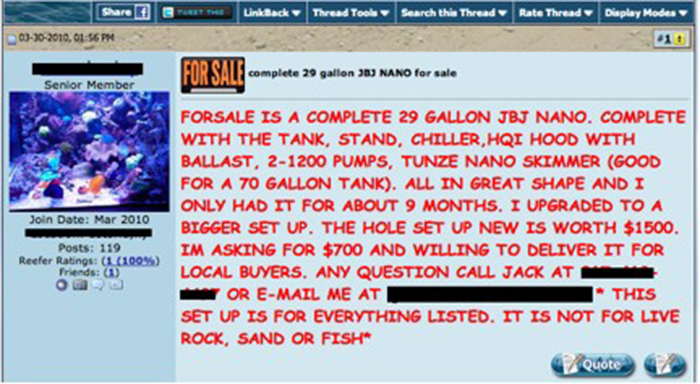
• Don’t use all caps. Writing in all caps is the Internet’s equivalent of shouting, is considered rude, and is really hard to read. If it is hard to read people are going to stop reading and move onto something else. Typing in all caps is a choice, not a genetic disposition, so there is really no good reason to do it – unless you want to be ignored.
All caps is hard to read and considered rude, red all caps in a non standard font is even harder to read and considered even more rude. Richard Ross
• Avoid short hand. I understand that a lot of us text and short hand really helps save time, but not everyone knows every acronym or short hand. When you are asking someone to spend their time answering your questions you are more likely to get useful answers if you spend some time crafting your questions so they are easy to understand. IMHEIUO
• Provide relevant information. If you are having a problem with your tank, the first things people are going to want are some basics. Writing ‘all my water parameters are perfect’ isn’t really helpful because a lot of information is missing. I recently saw someone say all their tanks parameters were perfect, and after a bunch of prompting, it turned out they had only tested Calcium and Alkinlity. After a bunch more prompting they finally got their water tested at a fish store and they had Ammonia issues, which seems to be why their animals were dying. If that information was available sooner, the animals might have lived. Without knowing what parameters have actually been tested it is really hard for people to help you out. So, let them know what parameters you tested, what the results were and what test kit you were using along with the basics of your system.
• Thank people for their time. After you get the info you want or need say thanks. The more people feel that you respect their time and effort; the more likely they are to respond to you again in the future.
Giving information – Why should someone listen to you?
When you give advice, you want people to take you seriously. You think you have some helpful information to impart, so you want to present that information in ways that people can digest and understand. More importantly, giving information is a responsibility – people are going to act based on what you tell them and if your advice isn’t solid, it could end up costing people money and costing animals their lives.
• Apply Skeptical methodology to yourself. I think this is the most critical, and most difficult aspect of sharing information. Its one thing to apply skeptical thinking to others, but much more powerful to apply it to yourself. Is the information you are sharing backed up by evidence? Anecdote? Based on faulty reasoning? Honest? Based on authority rather than content? If you can stifle your own potentially faulty reasoning before it leaves your brain, your advice will be perceived as well rounded and trustworthy.
. Try not to state things as absolute. Our hobby is mostly one big grey area – we simply don’t know many absolutes and there are a million ways to run a reef tank. When you phrase something as absolute people tend to give it more weight, but that weight can be unnecessary and unhelpful in the long run. The difference between ‘Skimming is important for a successful reef tank’ and ‘I think skimming is important for a successful reef tank’ is subtle but vast. It can be argued that ‘I think’ isn’t necessary because, de facto, anything you write is what you think, but the statement is changed in the readers mind if the ‘I think’ is included. It transforms the statement from a direction to advice, and I think that advice is healthier for the growth of reef keepers than directions. Other qualifiers besides ‘I think’ that I think are helpful include ‘In my opinion…’, ‘Sometimes…’ and my favorite ‘It seems…’.
• Be patient. You may have to explain the same thing different ways for the point to be understood. Engage in the discussion and draw out more information from the person asking the questions that may help them see the situation form different perspectives. The process will also help you better understand what you are trying to communicate.
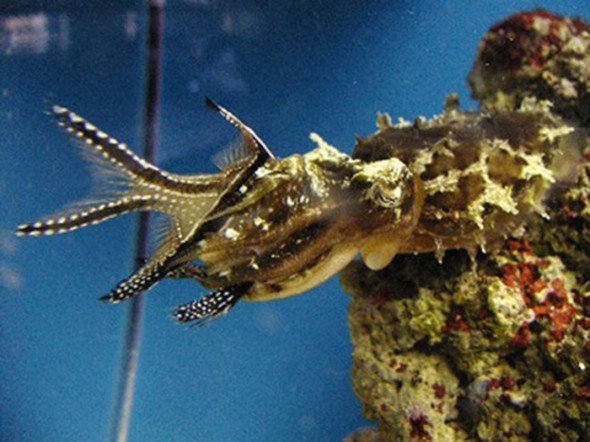
• Don’t assume, ask. Making assumptions about details or photos when the information is unclear usually only helps to derail the conversation. For instance, seeing a photo of a cephalopod eating a Banggai Cardinal doesn’t necessarily mean that the two animals were being housed together, leading to a preventable death. There might be another explanation. Ask questions for clarification to make sure you are addressing the correct issues before taking a poster to task for anything.
• Post links to sources. Supporting your advice is often a good idea, and getting people to do more reading helps build a more solid foundation of Reefkeeping knowledge for both individuals and our community as a whole.
• Be succinct. Walls of text are hard for people to digest. The more concise you are able to make your response, the more likely it will be understood.
• Avoid judgment. If someone is looking for advice about something that is clearly a bad idea, lets say putting a 15 inch Unicorn tang in a 55 gallon tank, you want to impart the information that this seems like a bad idea and that you think they shouldn’t do it. Judging them, telling them they are bad for doing it, often just makes them ignore you, which seems to be the antithesis of communication.
• I don’t know. Don’t be afraid to say that you don’t know something. It shows that you are intellectually honest and that the advice you do give is actually based on something.
Drama
Don’t get involved in online reef drama at the expense of your animals, or your real life. image – xkcd
It’s so easy to get drawn into drama, but drama is often more destructive than it is helpful because the discussion becomes more about the drama than about information. Don’t get me wrong, drama on the web is seductive, and it is hard to sit idly by when someone is wrong on the Internet! There is even something delicious and addicting about reading drama that you are not yourself involved in. That said, drama mostly serves to create rifts and develop bad blood between people who should be working together to push our understanding of what goes on in our tanks further. Here are some ideas to think about regarding avoiding drama.
• Keep a thick skin. A lot of forum drama comes from misunderstandings, so just assume that people are not trying to insult you. Try to give anything that irks you the most generous interpretation and try to look for the information in the communication rather than the real or perceived insult. Do you really care if boys2fish wrote that you are a doodie head that makes sweet love to your fish when no one is looking? Will it actually affect your life one bit? Probably not, so instead of engaging in drama, just let it go and spend your time on something fun and productive. There are plenty of other hobbyists that you could be engaging with your limited time.
Just because you have a giant skimmer doesn’t mean that everyone should have a giant skimmer. There are a million ways to ‘skin a reef’ and the more you keep that in mind when communicating, the more effective your communication . Richard Ross
• Don’t get lost in trying to convince people. You can’t make anyone take your advice no matter how good it is, and trying to convince people to think what you think they should think can sometimes make the actual information get lost in the shuffle. Sometimes it’s best to just state your advice and move on. Remember, there are a lot of people reading all the threads and often your advice may be more helpful for the silent lurkers, both now and in the future, than it is to the actual participants of the discussion.
• This is my last post. Saying ‘this is the last thing I have to say’ is very dramatic, so I suggest not doing it. Most of the time people that make such announcements end up coming back to the conversation, which marginalizes them because they just did the opposite of what they said they were going to do. If you are done with the conversation, just stop participating. I thought about suggesting not saying you are leaving the conversation unless you really, really mean it, but I can’t see a reason why anyone might want to completely shut the door permanently on any conversation, as there could always be a reason to participate in the future.
• Straw men and hyperbole. Avoid restating someone’s position in the worst possible light. Doing so is almost always inaccurate and puts people on the defensive. Besides, you don’t like it when it’s done to you so why do it to someone else? It is actually pretty easy to inadvertently restate someone’s position when trying to clarify the position. ‘You think Algae Scrubers suck’ is quite different form ‘Do you think Algae Scurbbers are bad in every situation?’. The second question is more likely to generate a useful, informative discussion; the first is likely to create drama.
Does this picture portray a dismal and predictable outcome of a poor choice of tank mates meaning ridicule and berating of the reefkeeper is necessary? Or, is something else going on? Asking instead of assuming will get you the answer, as well as making you seem more reasonable. (Something else was going on – the old and very productive fish was found almost dead, and was fed to the cuttle to determine how much a cuttle might eat in one meal). Richard Ross
• Be nice. It’s a big hobby and there is room for lots of opinions so there is no reason to berate people for thinking differently than you. Even if someone expresses something that you vehemently disagree with, slinging mud only makes you look muddy. Sure, there is a fleeting feeling of satisfaction that comes from ‘putting someone in their place’, but it comes at the cost of long-term respect. After all, you don’t want people to be scared to share information with you they are scared you are going to lash out at them.
• Don’t feed trolls. The people who are trying to get a rise out of you are wasting your, and everyone else’s, time. I would like to say ignore them, but sometimes they include just a bit of misinformation that you think should be addressed. I suggest that you don’t engage the troll, don’t ask for clarification, don’t tell them to go away, simply make the point you want to make and get out of the conversation.
• With all due respect. This is a sideways compliment that translates as ‘with no respect’. Somehow people think that starting a sentence with ‘With all due respect’ means they can follow it with the most outrageous things, when the reality is that initial statement is often hackle raising on its own. ‘Just saying’ has a similar effect, but comes at the end of sentence rather than the beginning. Being respectful is great and important, but is better expressed by tone and reality rather than a snippy phrase.
• There is a person behind every screen name. This one is easy to forget. The person you are arguing with, the person you think is the worst thing for the hobby or a fish killer, that person has people who love them, animals to take care of and generally, they care as much about Reefkeeping as you do. Try to find understanding and agree to disagree, rather than building drama.
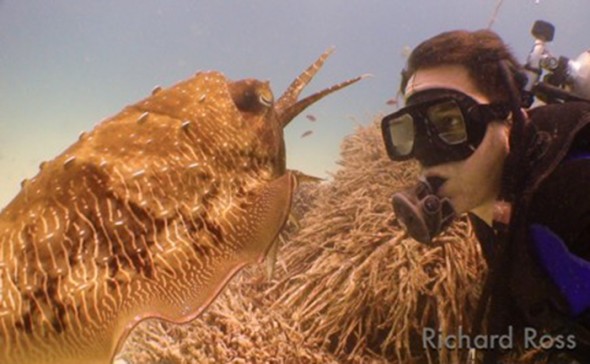
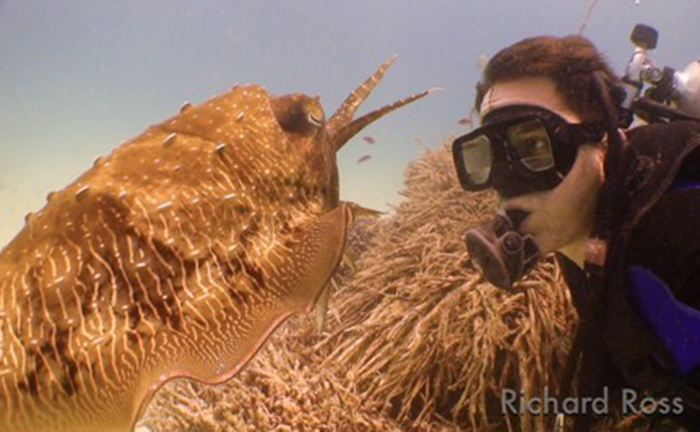
Understanding communication can even help discuss your tank with other species. Richard Ross
The online reefing community is just awesome and thrives on the give and take of good communication skills. If we can all work to make the process of giving and receiving information easy and productive by being open, honest and respectfully skeptical, our overall understanding of what goes on in our reef tanks can only get better. I hope you find some of the suggestions in this article useful, and helpful in your reefkeeping efforts to save money and lives.
Rich is co host of the irreverent Reef Beef Podcast, the podcast that is like hanging out in the conference hotel lounge on Saturday night after the show has closed for the day. See and listen on youtube or any podcast source.